
Calculator-Online.net

Calculator Online

Calculator-Online.net

Calculator Online

Follow Us On:

Your Result is copied!
Advertisement

Macro Calculator

Enter your values and select a fitness goal to determine the calories and macronutrients your body requires.

feet / inches (ft/in)

centimeters (cm)

feet / inches (ft/in)

centimeters (cm)

pounds (lbs)

kilograms (kg)

%
Advertisement

This free macro calculator helps determine your essential macronutrient requirements—Fats, Carbs, and Protein—based on age, height, gender, weight, and meals per day. It also provides a tailored calorie intake to support flexible dieting goals. Whether your goal is weight management, muscle building, fat loss, or overall well-being, this tool is valuable for both men and women.

What Are Macronutrients (Macros)?

Our daily meals contain three major nutrients, often referred to as "macros" or macronutrients: Fat, Carbohydrates (Carbs), and Protein. These nutrients are essential for human health because they support various bodily functions and provide essential vitamins and minerals such as copper, iron, iodine, and Vitamin A.
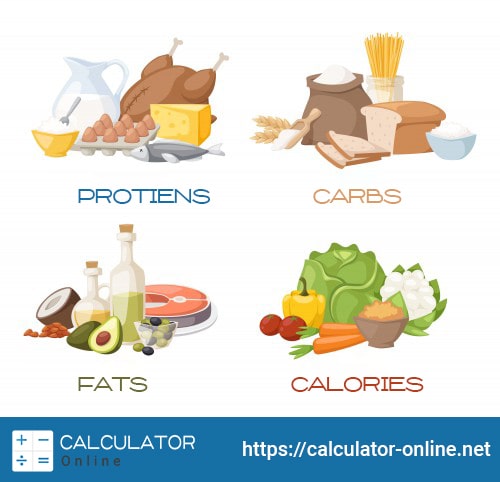
what are macros

How Many Calories Does Each Macronutrient Have?

  • Protein: 4 calories per gram
  • Carbohydrates: 4 calories per gram
  • Fat: 9 calories per gram

You can also use our calorie calculator to determine the number of calories in your flexible dieting plan.

Why Macros Are Important?

Each macronutrient plays a distinct role in supporting physiological functions:

Fats:

  • Cellular Structure: Essential component of cell membranes, contributing to their structure and function.
  • Hormone Production: Supports the production of hormones necessary for bodily functions.

Proteins:

  • Metabolic Functions: Facilitate chemical reactions and help absorb vitamins.
  • Muscle Maintenance and Growth: Repairs and builds tissues.
  • Immune System Support: Helps produce antibodies and other immune components.

Carbohydrates:

  • Energy Source: Provides essential energy for daily physical activities.
  • Brain Function: Primary energy source for the brain.
  • Weight Management: Balanced macros help maintain, lose, or gain weight effectively.

How to Calculate Macros?

Follow these steps to calculate macronutrients, using weight loss as an example:

For Weight Loss:

  • Calculate your Basal Metabolic Rate (BMR).
  • Determine total calorie needs using formulas like the Revised Harris-Benedict, Katch-McArdle, or Mifflin-St. Jeor equation. For convenience, use a TDEE calculator.
  • Create a calorie deficit.
  • Set protein intake at 25–35% of total calories.
  • Allocate the remaining calories to carbohydrates (45–65%) and fats (20–35%).
  • Multiply total daily calories by the percentage for each macro.
  • Divide the calories by the calories-per-gram number (Protein & Carbs = 4 kcal/g, Fat = 9 kcal/g) to get grams per day.

Rather than calculating manually, use the best macro calculator for weight loss to precisely tailor your nutritional intake.

For Muscle Gain:

  • Determine your BMR and estimate calorie needs.
  • Create a calorie surplus (usually 300–500 calories).
  • Set protein intake at 25–35% of total calories.
  • Allocate remaining calories to carbohydrates (45–65%) and fats (20–35%).
  • Multiply these percentages by total daily calories.
  • Convert calories to grams using 4 kcal/g for protein and carbs, 9 kcal/g for fats.

For Maintenance:

  • Determine BMR and daily caloric needs.
  • Set protein intake at 20–30% of total calories.
  • Assign remaining calories to carbohydrates (45–65%) and fats (20–35%).
  • Multiply total daily calories by macro percentages.
  • Convert calories to grams using standard calorie values per gram.

Example:

John’s Total Daily Energy Expenditure (TDEE) is 2,500 calories. For weight loss, he creates a 500-calorie deficit, targeting 2,000 calories. He chooses 30% protein and a 50/20 split between carbs and fats. Calculate macros:

Protein Intake:
  • 2,000 * 0.30 = 600 calories from protein
  • 600 ÷ 4 = 150 grams protein (1 g protein = 4 calories)
Carbs and Fats:
  • Carbs = 2,000 * 0.50 = 1,000 calories → 1,000 ÷ 4 = 250 grams
  • Fats = 2,000 * 0.30 = 600 calories → 600 ÷ 9 = 67 grams
John’s Macros:
  • Calories: 2,000
  • Protein: 150 g
  • Carbohydrates: 250 g
  • Fats: 67 g

For more insights, refer to Healthline.

FAQ’s:

What Is a Good Macro Ratio for Fat Loss or Muscle Gain?

The ideal macro ratio depends on age, weight, activity level, and metabolism. Recommended ranges:

For Fat Loss:

  • Carbohydrates: 45–65%
  • Proteins: 20–35%
  • Fats: 20–35%

For Muscle Gain:

  • Carbohydrates: 45–65%
  • Proteins: 25–35%
  • Fats: 20–35%

Best Macros for Weight Loss?

AMDR guidelines suggest:

  • Protein: 10–35% of daily calories
  • Fats: 20–35% of daily calories
  • Carbohydrates: 45–65% of daily calories

Best Macro Ratio for Keto?

  • Fats: 70–80%
  • Carbohydrates: 5–10%
  • Proteins: 10–20%
animal image
sales modal popup close

Easter into Action, Save With Satisfaction

UPTO

50 %

OFF

Online Calculator

Calculator Online

Get the ease of calculating anything from the source of calculator online

Email us at

Contact Us

© Copyrights 2026 by Calculator-Online.net