
 AI Tools
 Health
 Math
Math Everyday Life
 Finance
 Physics
 Chemistry
 Statistics
 Construction
 Pets
Pets Time & Date
 Conversion Calculator
 Sign In
Pages
Category
Follow Us On:
Pages
Category
Follow Us On:
Enter your mean arterial pressure and central venous pressure along with cardiac output. The calculator will swiftly predict the systemic vascular resistance of your blood, providing insights into your cardiac health.
Related
Systemic Vascular Resistance (SVR) or the SVR calculation represents the resistance that blood faces when flowing through veins, arteries, and capillaries.
Only three medical measurements are required to calculate SVR:
Cardiac Output (CO) is the total volume of blood pumped by the heart per ventricle per minute. It is expressed in liters per minute (L/min).
MAP is the average arterial pressure during one cardiac cycle. It is considered a more accurate indicator of blood circulation than just measuring systolic blood pressure (SBP).
Central Venous Pressure (CVP) is the pressure in the venae cavae near the right atrium. It reflects the heart's ability to pump blood to the body and return it to the arterial system.
Let’s explore more about SVR (Systemic Vascular Resistance).
Read on!
SVR determines a person’s blood pressure. When blood vessels constrict (vasoconstriction), SVR increases. Conversely, when vessels dilate (vasodilation), SVR decreases. SVR is unrelated to blood type. Medical experts define SVR as the measure of resistance the blood vessels present against blood flow.
.png)
SVR can be calculated using Cardiac Output (CO), Mean Arterial Pressure (MAP), and Central Venous Pressure (CVP).
Formula for Systemic Vascular Resistance:
SVR = [(MAP - CVP) ÷ CO] × 80
Or
SVR ≈ (MAP ÷ CO) × 80
CVP is often assumed to be 0 mmHg, allowing the formula to be simplified without CVP.
Although our free SVR calculator provides accurate estimations, these are only approximate values. Always consult a physician for medical interpretation and advice rather than relying solely on calculator results.
SVR is measured in mmHg·min/L or dyn·s·cm⁻⁵, both representing resistance to blood flow.
SVR is closely linked to blood pressure. Understanding SVR requires knowledge of the blood circulation process.
Blood is pumped from the right atrium to the right ventricle, then through the pulmonary artery to the lungs for oxygenation. To estimate your ideal heart rate, you can use the target heart rate calculator.
Oxygenated blood returns via the pulmonary veins to the left atrium, then moves into the left ventricle, which pumps it through arteries and capillaries to body tissues. SVR determines how much resistance blood encounters as it flows through arteries and veins. Online SVR calculators can help estimate the normal SVR range for an individual.
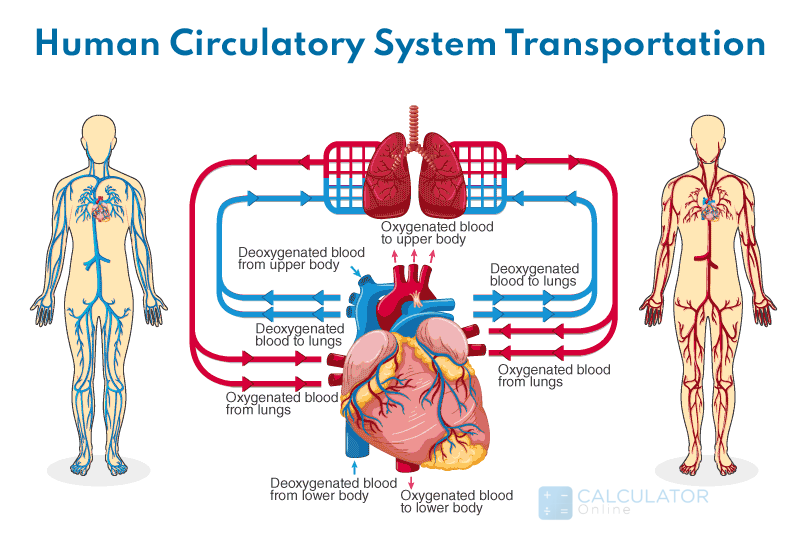
The systemic vascular resistance calculation can be understood with the following example:
Example: Consider a patient with MAP = 68 mmHg, Cardiac Output (CO) = 4.3 L/min, and CVP = 12 mmHg. What is the SVR?
Solution:
Formula for systemic vascular resistance:
SVR = [(MAP - CVP) ÷ CO] × 80
Implementing the values in the equation:
SVR = [(68 - 12) ÷ 4.3] × 80
SVR ≈ 1041.86 dyn·s/cm5
Normal systemic vascular resistance (SVR) range: 700 – 1600 dyn·s/cm5
The SVR calculator determines resistance in a few simple steps and provides the result along with the normal range for reference.
Steps:
Input:
Output:
The SVR resistance index represents the force that blood exerts on the blood vessels (veins and arteries) as it circulates through the body.
SVR affects the diameter of blood vessels and influences blood flow. Higher SVR increases resistance and blood pressure, while lower SVR reduces resistance.
As we age, the pulmonary arteries become stiffer, increasing pulmonary vascular resistance and impacting blood flow through the lungs.
Maintaining SVR within the normal range helps keep arteries and veins healthy. Abnormally high or low SVR values may indicate cardiovascular issues, highlighting the need for medical evaluation and potential treatment.
From Wikipedia: Vascular resistance
From NCBI: Pulmonary Vascular Resistance, Mechanism
Related
Add this calculator to your site.
×Just copy a given code & paste it right now into your website HTML (source) for suitable page.
Preview:



Easter into Action, Save With Satisfaction
UPTO
50 %
OFF
Give Us Your Feedback
Share Result
SVR Calculator

Links
Home Conversion Calculator About Calculator Online Blog Hire Us Knowledge Base Sitemap Sitemap TwoEmail us at
Contact Us© Copyrights 2026 by Calculator-Online.net
