
 AI Tools
 Health
 Math
Math Everyday Life
 Finance
 Physics
 Chemistry
 Statistics
 Construction
 Pets
Pets Time & Date
 Conversion Calculator
 Sign In
Pages
Category
Follow Us On:
Pages
Category
Follow Us On:
Select the dimension and enter the masses in the designated fields. The calculator will instantly determine the cumulative center of mass.
Related
An online center of mass calculator is a smart and easy-to-use tool that helps determine the center of mass of single or multiple objects in one, two, or three dimensions. Before using it, you should understand some important physical concepts explained below. Keep reading!
“The center of mass is the specific point in a body or system where its total mass can be assumed to be concentrated.”
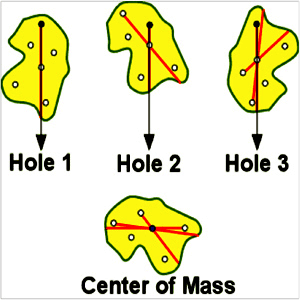
Brief Explanation:
In physics, when analyzing the motion of a group of particles, it is unnecessary to track each particle separately. Instead, we represent the entire system by a single imaginary point called the center of mass. If an object is supported exactly at this point, it will remain balanced.
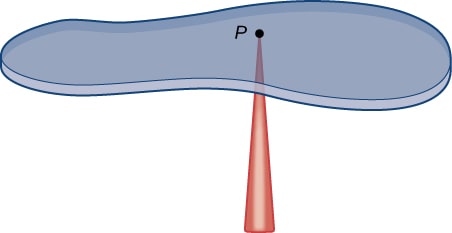
All external forces acting on a body effectively influence this point. Therefore, the motion of a system can be described by studying the movement of its center of mass.
“The center of gravity is the location at which the entire gravitational force on a body is considered to act.”
The position of the center of gravity may change depending on the object’s orientation. However, in a uniform gravitational field, the center of gravity and center of mass overlap.
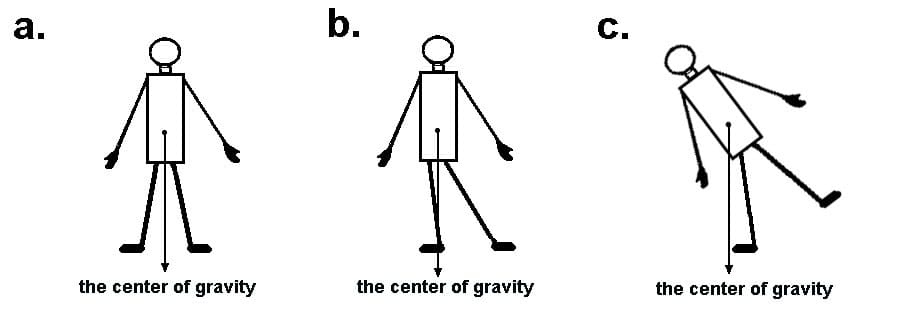
Relationship Between Center of Mass and Center of Gravity:
When gravity is constant throughout a region, both points are identical. In contrast, if gravity varies from place to place, the center of gravity shifts while the center of mass remains fixed relative to the object.
The center of mass of a system can be calculated using this general formula:
$$ \text{COM} = \frac{m_{1}r_{1} + m_{2}r_{2} + \dots + m_{n}r_{n}}{m_{1} + m_{2} + \dots + m_{n}} $$
Where:
This equation works for one-dimensional systems and can be extended to two or three dimensions as well.
In a 2D coordinate plane, the coordinates of the center of mass are given by:
$$ x_{com} = \frac{1}{M} \sum m_{n} x_{n} $$
$$ y_{com} = \frac{1}{M} \sum m_{n} y_{n} $$
Here, M represents the total mass of the system.
For a three-dimensional system, the coordinates are calculated as:
$$ x_{com} = \frac{1}{M} \sum m_{n} x_{n} $$
$$ y_{com} = \frac{1}{M} \sum m_{n} y_{n} $$
$$ z_{com} = \frac{1}{M} \sum m_{n} z_{n} $$
These formulas help determine the exact balancing point in space.
Our online center of mass calculator applies these equations automatically to generate quick and precise results.
You can determine the center of mass manually by applying the formula. Let’s understand this with examples:
Example #01:
A 12 kg mass is placed at 4 m from a reference point, and another 6 kg mass is placed at 1.5 m. Find the center of mass.
Solution:
Using the formula:
$$ \text{COM} = \frac{m_1 r_1 + m_2 r_2}{m_1 + m_2} $$
$$ \text{COM} = \frac{(12)(4) + (6)(1.5)}{12 + 6} $$
$$ \text{COM} = \frac{48 + 9}{18} $$
$$ \text{COM} = \frac{57}{18} $$
$$ \text{COM} = 3.16 \text{ m} $$
Example #02:
Two objects are located in a 2D plane:
Mass 1 = 3 kg
X₁ = 2 cm
Y₁ = 1 cm
Mass 2 = 2 kg
X₂ = 5 cm
Y₂ = 4 cm
Solution:
Total mass M = 3 + 2 = 5 kg
$$ x_{com} = \frac{(3)(2) + (2)(5)}{5} = \frac{6 + 10}{5} = 3.2 \text{ cm} $$
$$ y_{com} = \frac{(3)(1) + (2)(4)}{5} = \frac{3 + 8}{5} = 2.2 \text{ cm} $$
Therefore:
$$ COM = (3.2 , 2.2) $$
This tool simplifies complex calculations by following these steps:
Input:
For 1D:
For 2D:
For 3D:
Output:
The center of mass is a conceptual point used for simplifying calculations. It may not always lie inside the object, but it accurately represents mass distribution.
The acceleration of the center of mass depends only on the net external force acting on the system, regardless of internal forces.
Momentum is the product of mass and velocity of a body. It describes the quantity of motion and has both magnitude and direction.
The center of mass has the dimension of length, and its SI unit is meter (m).
The center of mass plays a vital role in physics, engineering, aviation, and space sciences. It helps determine stability and motion of objects. Using an online center of mass calculator makes the process fast, reliable, and error-free.
Physics textbooks and educational platforms covering mechanics, mass distribution, and motion of particles.
Related
Add this calculator to your site.
×Just copy a given code & paste it right now into your website HTML (source) for suitable page.
Preview:



Easter into Action, Save With Satisfaction
UPTO
50 %
OFF
Give Us Your Feedback
Share Result
Center of Mass Calculator

Links
Home Conversion Calculator About Calculator Online Blog Hire Us Knowledge Base Sitemap Sitemap TwoEmail us at
Contact Us© Copyrights 2026 by Calculator-Online.net
