
 AI Tools
 Health
 Math
Math Everyday Life
 Finance
 Physics
 Chemistry
 Statistics
 Construction
 Pets
Pets Time & Date
 Conversion Calculator
 Sign In
Pages
Category
Follow Us On:
Pages
Category
Follow Us On:
Enter the required parameters and the tool will readily calculate the free fall distance, time, and height of the object.
Related
An online free fall calculator helps determine the speed, time, and height of a freely falling object under the influence of gravity. Before using the calculator, review the explanation below to better understand the concept of free fall.
In physics:
“An object is said to be in free fall if it moves under the influence of gravity alone, without any other external forces acting on it.”
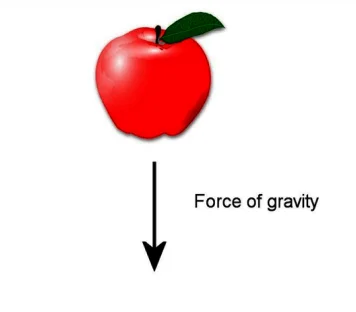
In ideal free fall, we assume:
The standard acceleration due to gravity is approximately:
\( 9.8 \frac{m}{s^{2}} \) or \( 32.17 \frac{ft}{s^{2}} \).
In real-life conditions, falling objects eventually reach terminal velocity.
“Terminal velocity is the constant speed reached when the upward air resistance (drag force) equals the downward gravitational force.”

At terminal velocity:
$$ F_{d} = F_{g} $$
The object stops accelerating and continues falling at constant speed.
Examples:
The following formulas help determine speed, height, and time during free fall.
$$ V = V_{o} + g t $$
Where:
Case 1: Initial velocity = 0
$$ S = \frac{1}{2} g t^{2} $$
Case 2: With initial velocity
$$ S = V_{o} t + \frac{1}{2} g t^{2} $$
$$ t = \sqrt{\frac{2h}{g}} $$
Example #01:
An object falls from rest and reaches the ground in 30 seconds. Find its height.
Solution:
Using:
$$ S = \frac{1}{2} g t^{2} $$
$$ S = 0.5 \times 9.81 \times (30)^{2} $$
$$ S = 0.5 \times 9.81 \times 900 $$
$$ S = 4414.5 \, m $$
Example #02:
Find the velocity of an object with an initial velocity of \( 21 \frac{m}{s} \) after 10 seconds.
Solution:
$$ V = V_{o} + g t $$
$$ V = 21 + (9.8 \times 10) $$
$$ V = 21 + 98 $$
$$ V = 119 \frac{m}{s} $$
Input:
Output:
Free fall occurs because gravity pulls objects toward Earth. In a vacuum, all objects fall at the same rate regardless of mass. Differences in falling speed in air are caused by air resistance, not mass.
Free fall is uniformly accelerated motion because the acceleration due to gravity remains constant (ignoring air resistance).
Weightlessness occurs when an object is in continuous free fall. Although gravity still acts on it, the object experiences no normal support force, creating the sensation of zero weight.
| Time (s) | Speed (m/s) |
| 1 | 9.8 |
| 2 | 19.6 |
| 3 | 29.4 |
| 4 | 39.2 |
In free fall, gravity is the only force acting on the object. In weightlessness, the object experiences no normal force (support force), even though gravity may still be acting.
Free fall motion describes how objects accelerate solely under gravity. This concept explains everything from falling objects on Earth to planetary motion around the Sun. Free fall calculators simplify solving related physics problems quickly and accurately.
From Wikipedia: Free fall. From Khan Academy: Impact velocity. From Lumen Learning: Free-Falling Objects
Related
Add this calculator to your site.
×Just copy a given code & paste it right now into your website HTML (source) for suitable page.
Preview:



Easter into Action, Save With Satisfaction
UPTO
50 %
OFF
Give Us Your Feedback
Share Result
Free Fall Calculator

Links
Home Conversion Calculator About Calculator Online Blog Hire Us Knowledge Base Sitemap Sitemap TwoEmail us at
Contact Us© Copyrights 2026 by Calculator-Online.net
