
 AI Tools
 Health
 Math
Math Everyday Life
 Finance
 Physics
 Chemistry
 Statistics
 Construction
 Pets
Pets Time & Date
 Conversion Calculator
 Sign In
Pages
Category
Follow Us On:
Pages
Category
Follow Us On:
Find the force exerted by a surface on an object by entering a few required inputs into the normal force calculator.
Related
Use this normal force calculator to determine the force a surface exerts on an object to prevent it from falling.
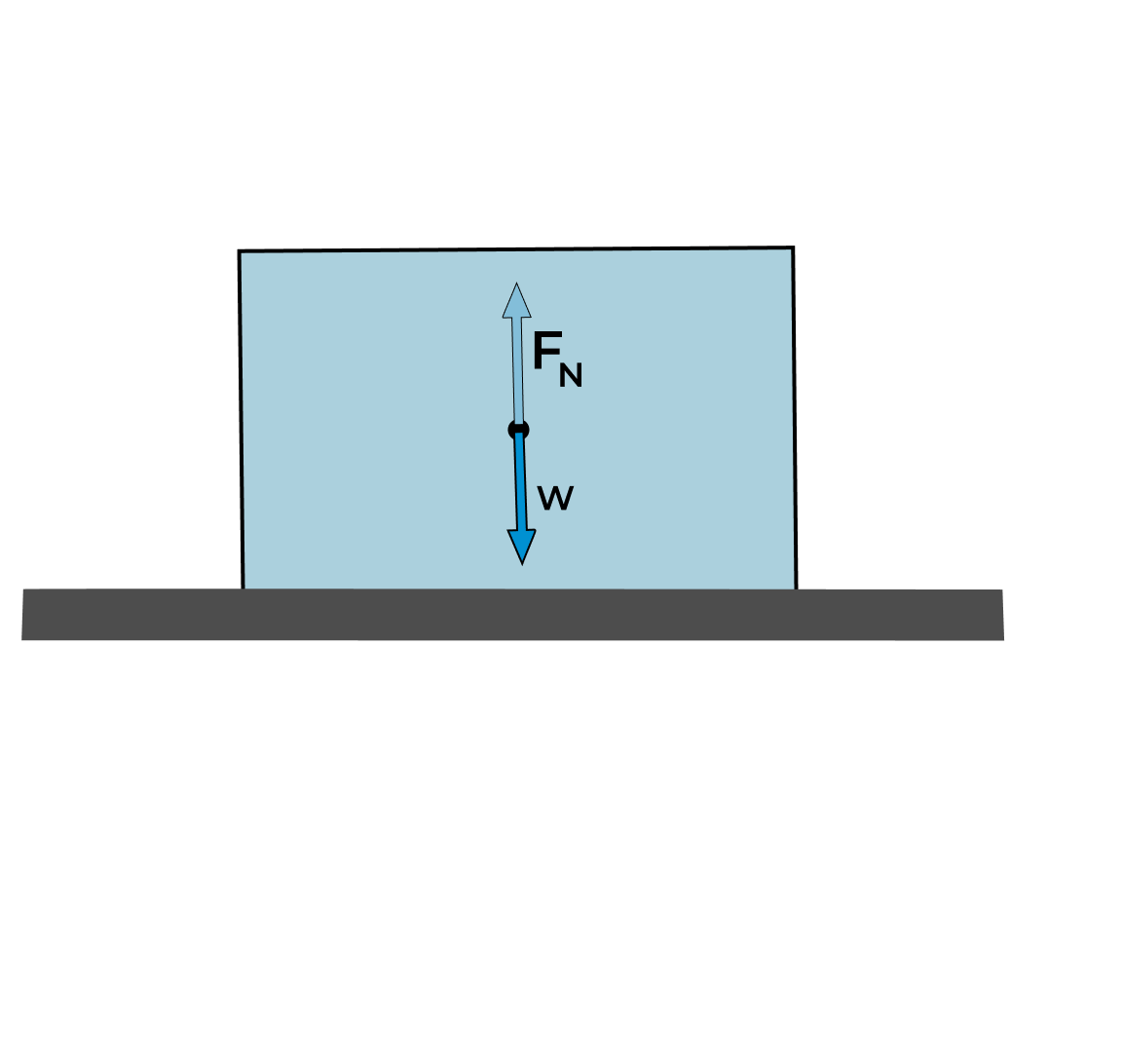
The normal force is the upward force exerted by a surface on an object resting on it. For example, if you place a glass on a table, gravity pulls the glass downward, and the table exerts an upward force to counteract it. This upward force is called the normal force.
It is denoted by \(F_N\) or N, and its SI unit is the Newton (N). Normal force follows Newton’s Third Law of Motion.
Normal force acts perpendicular to the surface. Its magnitude depends on whether the object is on a flat (horizontal) surface or an inclined plane.
1. Horizontal Surface:
\(F_N = m \cdot g\)
2. Inclined Surface:
\(F_N = m \cdot g \cdot \cos(\alpha)\)
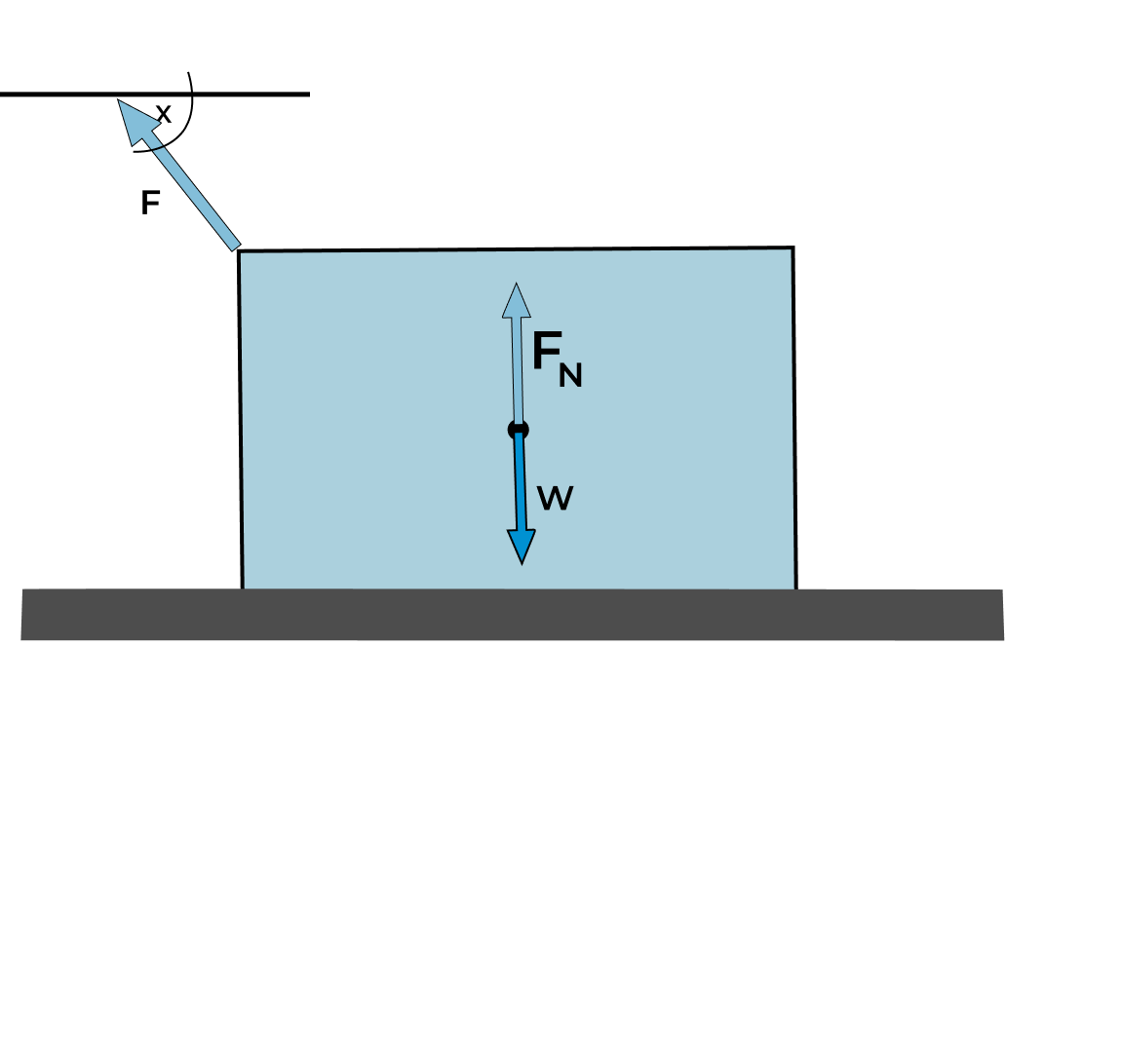
3. Horizontal Surface with External Force Upward:
\(F_N = m \cdot g - F \cdot \sin(x)\)
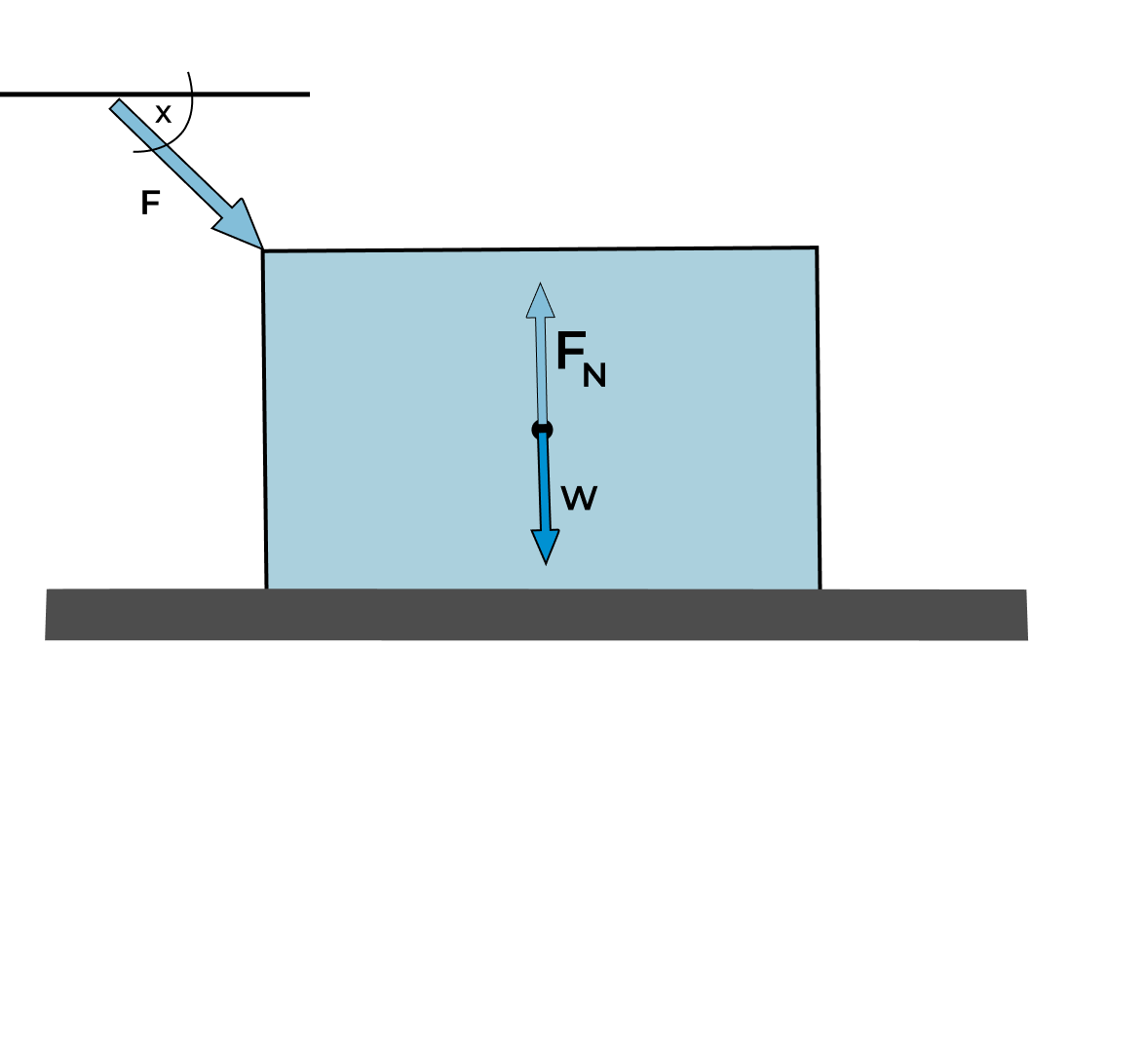
4. Horizontal Surface with External Force Downward:
\(F_N = m \cdot g + F \cdot \sin(x)\)
Problem: An object of mass 1 kg is on a table inclined at 45°. Find the normal force.
Solution:
Calculation:
\(F_N = 1 \cdot 9.8 \cdot \cos(45^\circ) \approx 6.92\ \text{N}\)
Problem: An object of mass 20 kg is on a horizontal surface with an external downward force of 200 N at 30°. Find the normal force.
Solution:
Formula: \(F_N = m \cdot g + F \cdot \sin(\theta)\)
Calculation:
\(F_N = 20 \cdot 9.8 + 200 \cdot \sin(30^\circ) = 196 + 100 = 296\ \text{N}\)
Related
Add this calculator to your site.
×Just copy a given code & paste it right now into your website HTML (source) for suitable page.
Preview:



Easter into Action, Save With Satisfaction
UPTO
50 %
OFF
Give Us Your Feedback
Share Result
Normal Force Calculator

Links
Home Conversion Calculator About Calculator Online Blog Hire Us Knowledge Base Sitemap Sitemap TwoEmail us at
Contact Us© Copyrights 2026 by Calculator-Online.net
