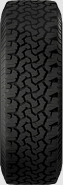
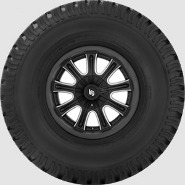
The tire size calculator helps determine key tire specifications such as diameter, width, sidewall height, circumference, and revolutions per mile. Simply enter a metric or standard tire size to get accurate measurements. All options provided by our tire size comparison calculator are within a ±3% variance of the Original Equipment Manufacturer (OEM) tire size.
Choosing a tire beyond this 3% tolerance can result in brake failure or serious vehicle damage while driving.
How to Calculate Tire Dimensions
The following formulas are used to calculate tire dimensions:
- Section Height:
Section Height = Aspect Ratio × Tire Width
- Tire Diameter:
Tire Diameter = Wheel Diameter + 2 × Section Height
Aspect Ratio
The aspect ratio is the ratio of the tire's height to its width, expressed as a percentage:
Aspect Ratio = Height of Tire / Width of Tire
For example, an aspect ratio of 70 means the tire's height is 70% of its width.

Tire Width
Tire width measures the distance from one sidewall to the other. For example, the code P225 represents a passenger vehicle tire with a nominal width of 225 millimeters. Using a tire calculator ensures the correct width for safe and reliable performance.
Tire Diameter
Tire diameter is the height of the tire from top to bottom, including the rim. For example, P225/70R16 fits a 16-inch rim. A tire size calculator helps determine the exact diameter in both metric and standard units.
Wheel Diameter
The wheel or rim diameter is measured across the wheel’s face, usually in inches. In a tire code, the number after the “R” indicates the wheel diameter.
Section Height
The section height is the vertical distance from the rim to the outer edge of the tire. For example, xxx/65 indicates that the section height is 65% of the tire’s width.
How to Read a Tire Code
A typical tire code includes the following components:

Intended Use
- P – Passenger car
- LT – Light truck
- ST – Special trailer
- T – Temporary
Nominal Section Width
The first number indicates the tire width in millimeters. To convert to inches, divide by 25.4. For example, in 285/75R16, width = 285 mm and aspect ratio = 75%.
Internal Construction
- R – Radial
- D – Diagonal
- B – Bias-belted
Load Index / Capacity
The number before the speed rating indicates the tire’s load index, the maximum load it can safely carry.
Speed Rating
The last letter in the code represents the tire’s speed rating (e.g., H, M, V).
US DOT Code
The DOT code identifies the tire’s manufacturer, factory, batch, mold, and production date in the USA.
Working of the Tire Size Calculator
To calculate tire dimensions using the calculator:
Input:
- Select the tire type
- Enter tire specifications
- Click "Calculate"
Output:
- Tire diameter
- Tire width
- Sidewall height
- Tire circumference
- Revolutions per mile / mileage
Tire Conversion Chart
The tire conversion chart provides diameter, rim compatibility, and tolerance for various tire sizes. Use the calculator to compare options and select the right tire for your vehicle.
| Tire Size |
Diameter |
Rim (H × W) |
| 285/70R18 | 33.7″ (+3%) | 18″ x 7.5–9.5″ |
| 305/65R18 | 33.6″ (+2.7%) | 18″ x 8.5–11.0″ |
| 285/60R20 | 33.5″ (+2.4%) | 20″ x 8.0–10.0″ |
The tire size comparison calculator instantly shows differences between tire options, helping users select tires based on diameter, load capacity, and performance.
References:

 AI Tools
 Health
 Math
Math Everyday Life
 Finance
 Physics
 Chemistry
 Statistics
 Construction
 Pets
Pets Time & Date
 Conversion Calculator
 Sign In